How to Turn Around Strategy for Businesses
When Culture Is the Real Problem: Lessons from 20 Business Turnarounds

Words by
Carl J. Cox
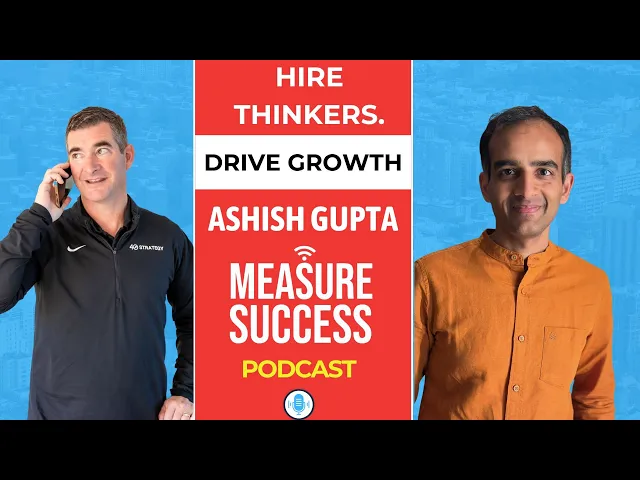
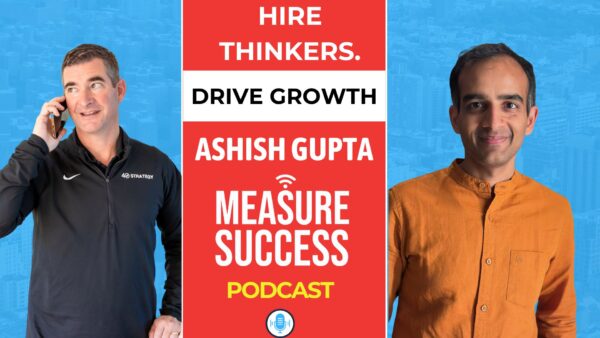
What do you do when a company is declining, and the issue is not the market, not the product, but the culture? In this episode of the Measure Success Podcast, hosted by Carl J. Cox, CEO of 40 Strategy and 40 Accounting, interviews,Ashish Gupta founder and CEO of ScaleUp Exec, a fractional COO firm that helps small and mid-sized companies improve execution and accelerate growth. Ashish has worked on more than 20 business transformations. He has experience in large companies like Qualcomm and Apple, and he has acquired and rebuilt smaller companies himself. This conversation explores leadership, systems thinking, AI adoption, and how founders define success.
The “Copy-Paste” Culture That Was Killing the Business
Ashish shares a story about acquiring a distressed e-commerce subscription business. For two years before he acquired it, revenue had been declining.
The team was not lazy. They were not careless. But they had fallen into a pattern.
Every month looked like the month before. Same:
Campaigns
Execution
Thinking
No innovation. No new tests. No change.
Ashish describes this as a “copy-paste” culture.
If a business does not improve, adapt, and test new ideas, it will decline. Markets change. Customers change. Competitors change.
When he stepped in, Ashish made a mistake. He tried to change the culture without changing the team. He spent a year and a half working to shift mindset and build innovation.
It did not work.
Eventually, he realized the team had signed up for a lifestyle business. They wanted stability, not aggressive growth.
That is not wrong.
But it did not match the direction he needed.
He made a difficult decision. He let go of 95% of the team and rebuilt with new expectations from day one.
The business changed trajectory.
Business First, Then Team
Many leaders say, “Take care of the team first and everything will work out.”
Ashish challenges that thinking.
He explains that the business must come first. If the business fails, the team cannot thrive.
The team should be a close second — but not first.
This perspective requires courage. It means making decisions that may not be popular but are necessary.
Leaders must protect the health of the business so the team has a future.
How to Hire People Who Think
Ashish looks for people who think independently.
He does not want team members who wait for instructions and execute tasks. He wants people who:
Observe the market
Identify opportunities
Propose solutions
Think through second- and third-level impacts
One interview question he uses is simple:
“What was your biggest accomplishment in your last role?”
Then he digs deeper.
He asks follow-up questions to understand:
How much detail they handled
Whether they truly owned the result
How deeply they understood the process
Depth reveals thinking.
Surface answers reveal execution only.
In a fast-changing market, thinking matters more than task completion.
Systems, Process, and People
When asked what matters most — systems, process, or people — Ashish usually starts with systems.
For example, if you want to grow revenue, you must define:
Who is your ideal customer?
Where do they spend time?
What channels will you test?
What metrics define success?
That is systems thinking.
Then you define process — how execution will work.
Then you hire or assign people to execute.
If you skip systems thinking, you may hire strong people but point them in the wrong direction.
AI Done Wrong vs AI Done Right
Many companies rush into AI and new tools without clarity.
Ashish shares an example of a medical practice that had purchased multiple software tools. The CEO turned them on — but the team resisted.
Why? They:
Did not understand the purpose.
Were not trained.
The workflow did not align.
The result: wasted money and frustration.
Ashish and his team stepped back and asked:
What is the real business problem?
They discovered a collections issue. Revenue was stuck in unpaid accounts.
The software could help — but only if implemented correctly.
They redesigned workflows, trained staff, set KPIs, and showed quick wins.
Within months, they recovered significant revenue that would have been written off.
AI and software are tools. Without strategy and alignment, they fail.
What Founders Really Want
Most founders say they want growth.
But when Ashish asks deeper questions, he often discovers something else.
Some founders want:
Stable cash flow
More time freedom
Less daily involvement
Lifestyle flexibility
Growth is not always the goal.
Clarity is the goal.
Once you understand what success means personally, business strategy becomes aligned.
Measuring Success
Sometimes success is revenue growth.
Sometimes it is:
Building a leadership team
Removing the founder from daily operations
Stabilizing cash flow
Preparing for exit
Ashish helped one company move from losing $350,000 per month to break-even in three months — and profitable in month four. Fourteen months later, the company exited successfully.
That is measurable success.
But success always depends on context.
Personal Leadership and Centered Thinking
Ashish also shares how he manages stress. He:
Focuses on internal stability.
Believes reactions make decisions harder. When leaders react emotionally, they reduce clarity.
Works to stay centered before making major decisions.
This habit improves leadership judgment.
He also shares a personal shift. Instead of setting long-term personal goals, he is experimenting with being fully present and doing his best in each moment.
Less focus on future outcomes.
More focus on present execution.
Final Takeaways
This episode highlights several leadership truths:
Culture drives trajectory.
Business health must come first.
Hire thinkers, not just executors.
Systems guide process and people.
AI must solve real problems.
Success must be defined clearly.
If you are an entrepreneur, operator, or executive, this conversation will help you evaluate your own organization.
Are you copying and pasting?
Are your systems clear?
Does your team think independently?
What does success really mean for you?
Listen to the full episode of the Measure Success Podcast and begin measuring your success with clarity.